
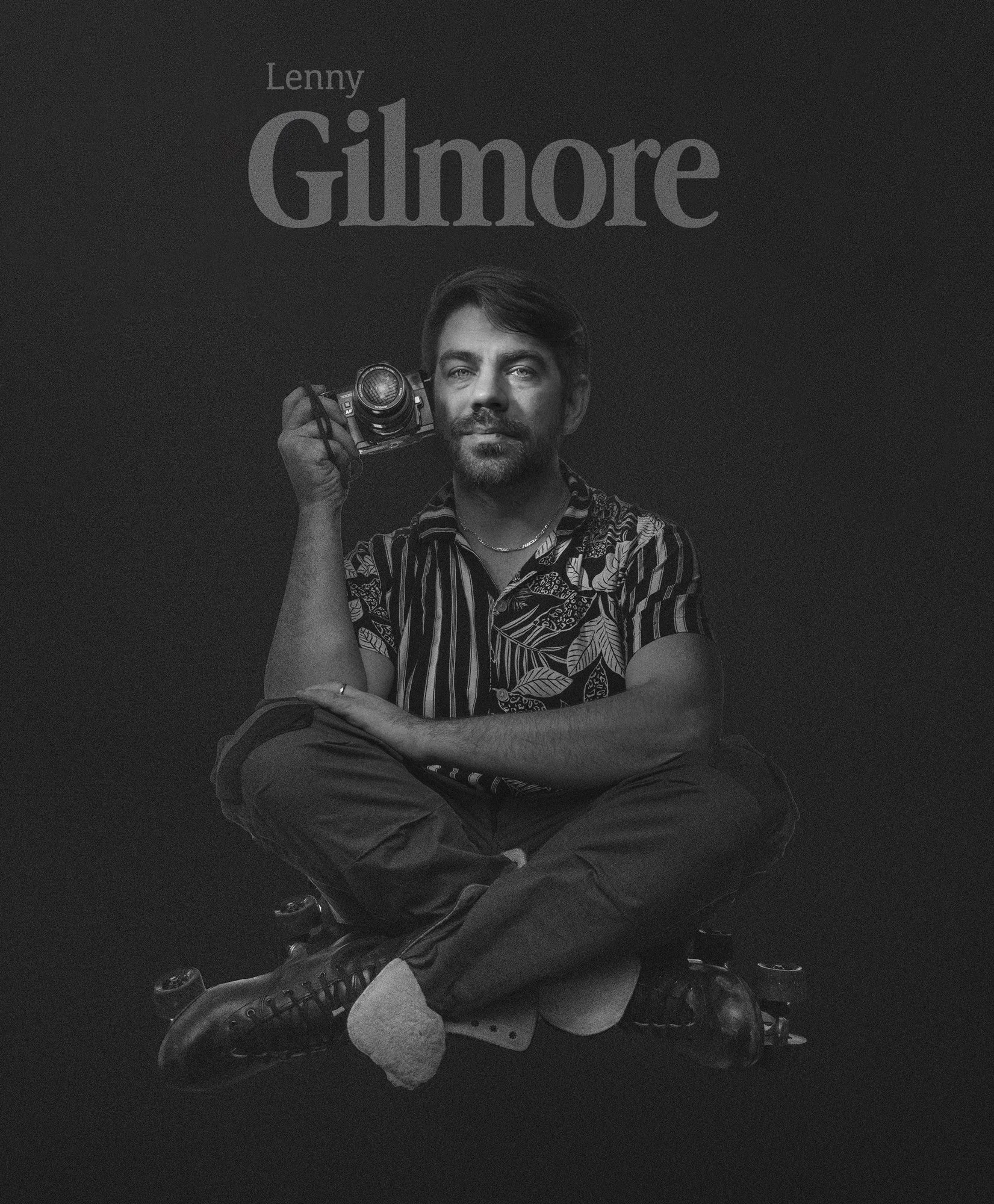
Lenny Gilmore
By Ragnaroll
Photography ©Lenny Gilmore
We’re excited to share our first photographer interview, and it felt only right to start with Lenny Gilmore from Chicago.
One of the most active photographers in roller skating today, Lenny has worked with many brands, magazines, and platforms across the scene. But more importantly, he’s part of it. We sat down with Lenny to talk about his journey, his approach to documenting skating, and what he’s working on next.
How did your skating journey start? Did skating come before photography, photography before skating, or did the two collide at the same time?
Skating came first. I grew up on a cul-de-sac in the suburbs of Chicago, where neighbourhood kids regularly gathered to play roller hockey. I played hockey through high school, then transitioned to roller derby after college. Skating and photography finally collided when my first roller derby team asked me to take their portraits.
Do you still find time to skate these days? What keeps you motivated to stay on wheels?
Not as much as I’d like lately. I skated every single day for 1,004 days—from August 2022 into early 2025—but I’ve been on a bit of a hiatus since. I played some roller derby last year and did some distance skating, but I haven’t really laced up yet this year.
During that 1,000-day streak, I let my obsessive side completely take the wheel—I honestly couldn’t not skate every day.
In 2026, I want to skate more again. The community always pulls me back in, and it’s just so damn fun.
When you are shooting a session, what are you usually looking for? Is there a feeling, a moment, or something specific that tells you it is worth pressing the shutter?
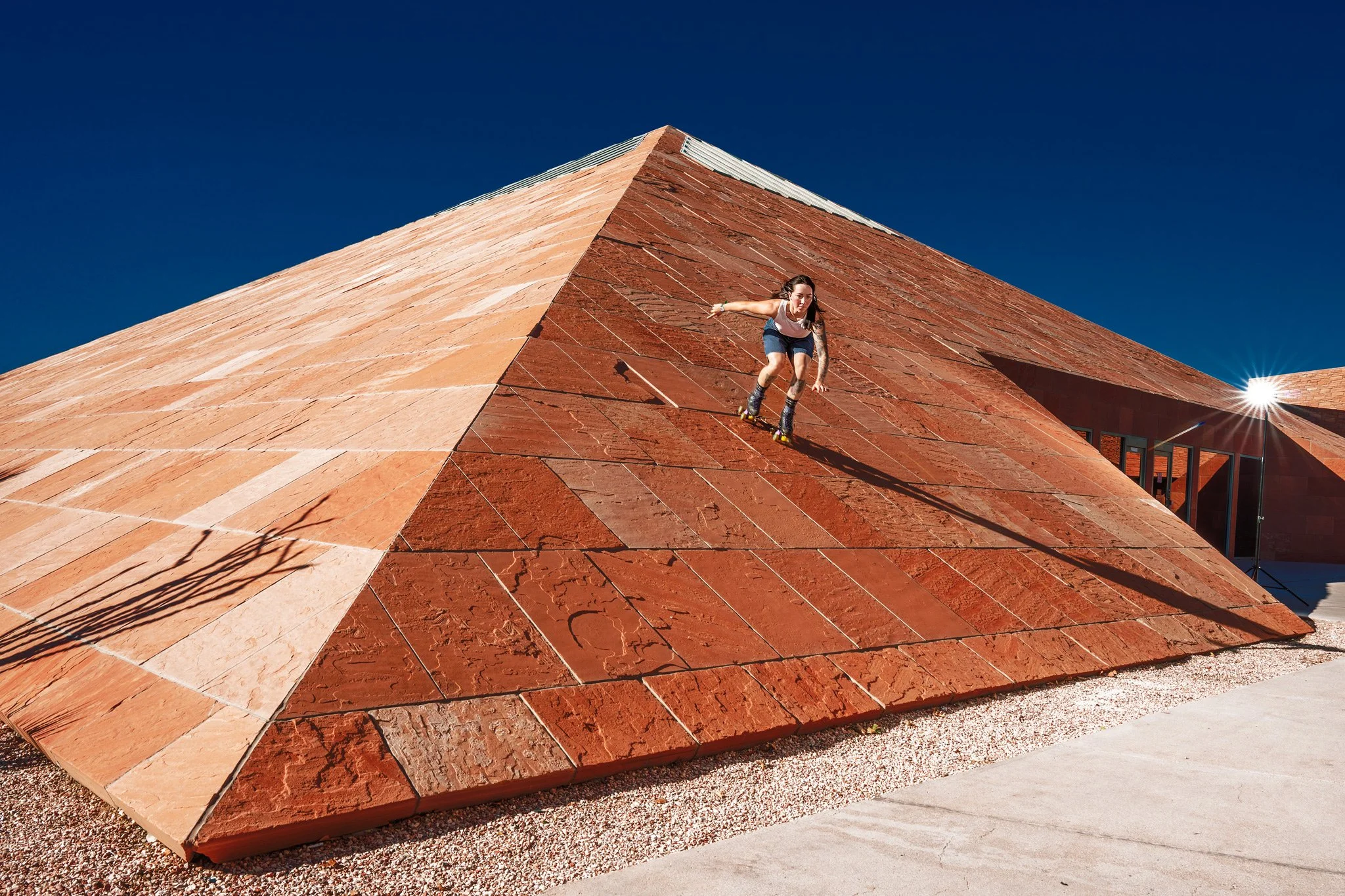
When I photograph aggressive roller skating, I usually start by stepping back and observing. I watch how everyone moves, skate around a bit myself, and take in the environment, the poetry of the architecture and how it interacts with the skaters. Then I’ll approach someone and say, “I think this is a great spot. Do you think you have any moves that could work here?”
When I press the shutter with intention, it’s because I’m seeing a symmetry come together. I’m witnessing a suspension of gravity and, briefly, of time itself. I feel it in my body, right in my belly.
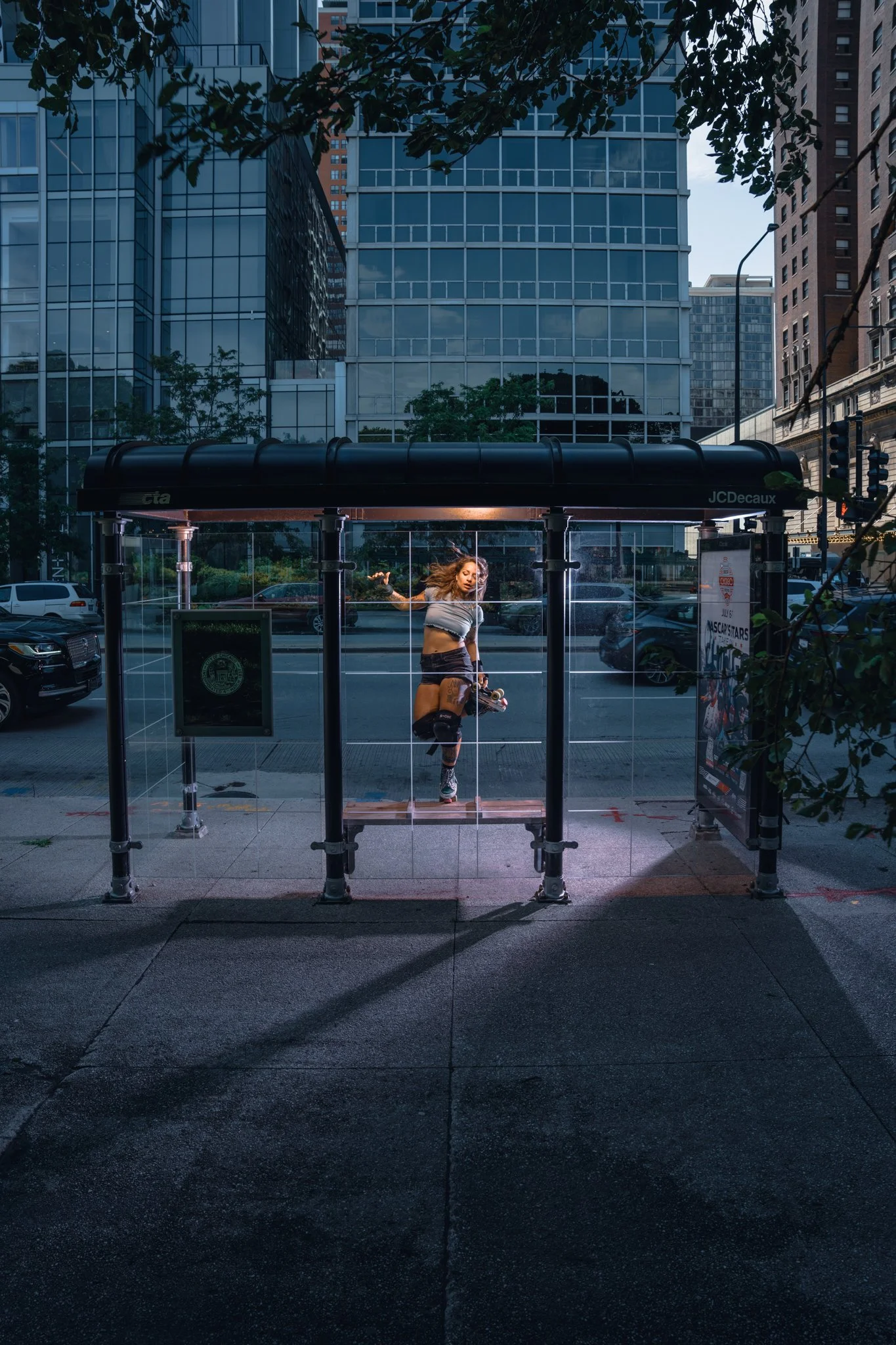
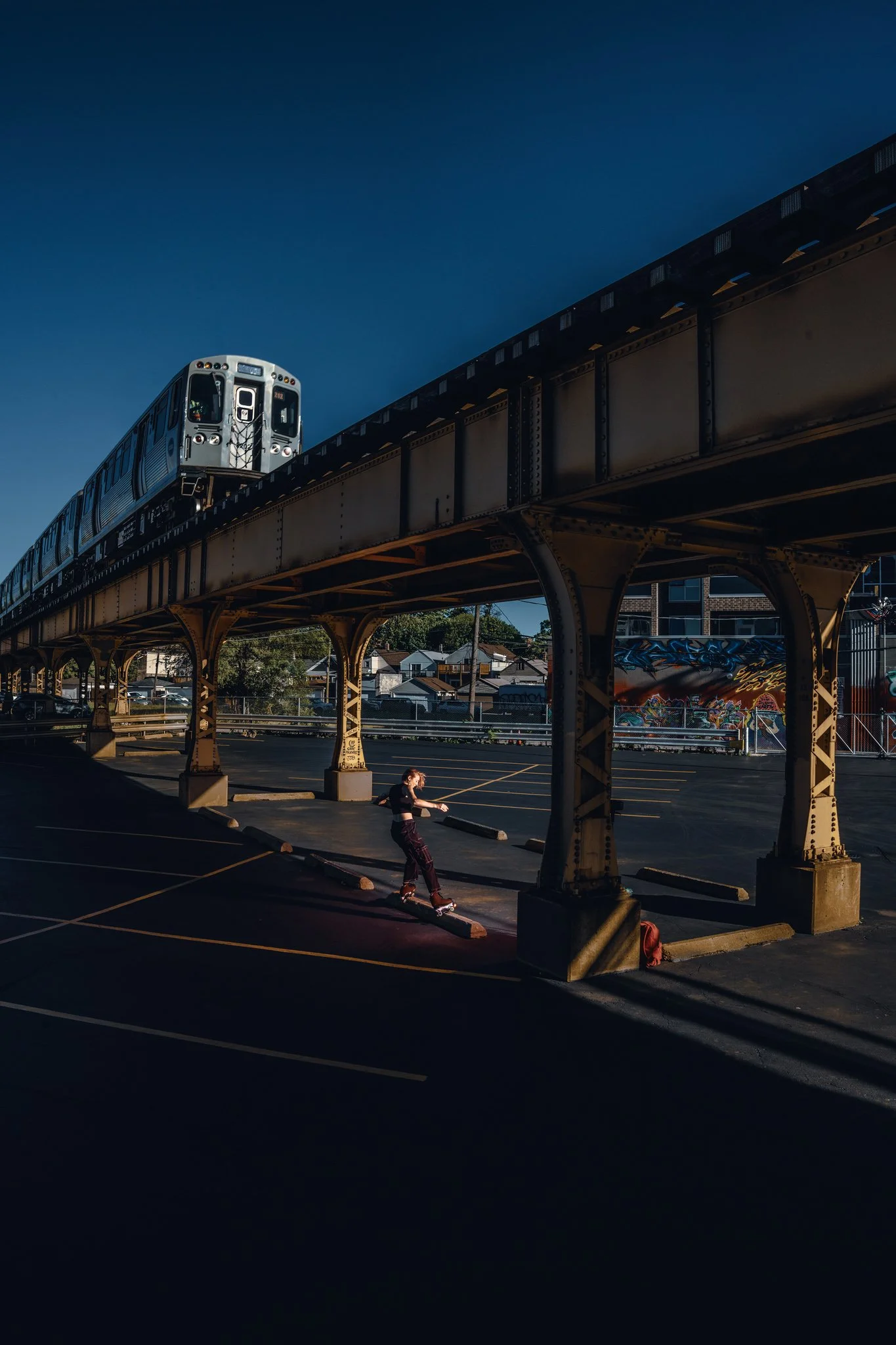
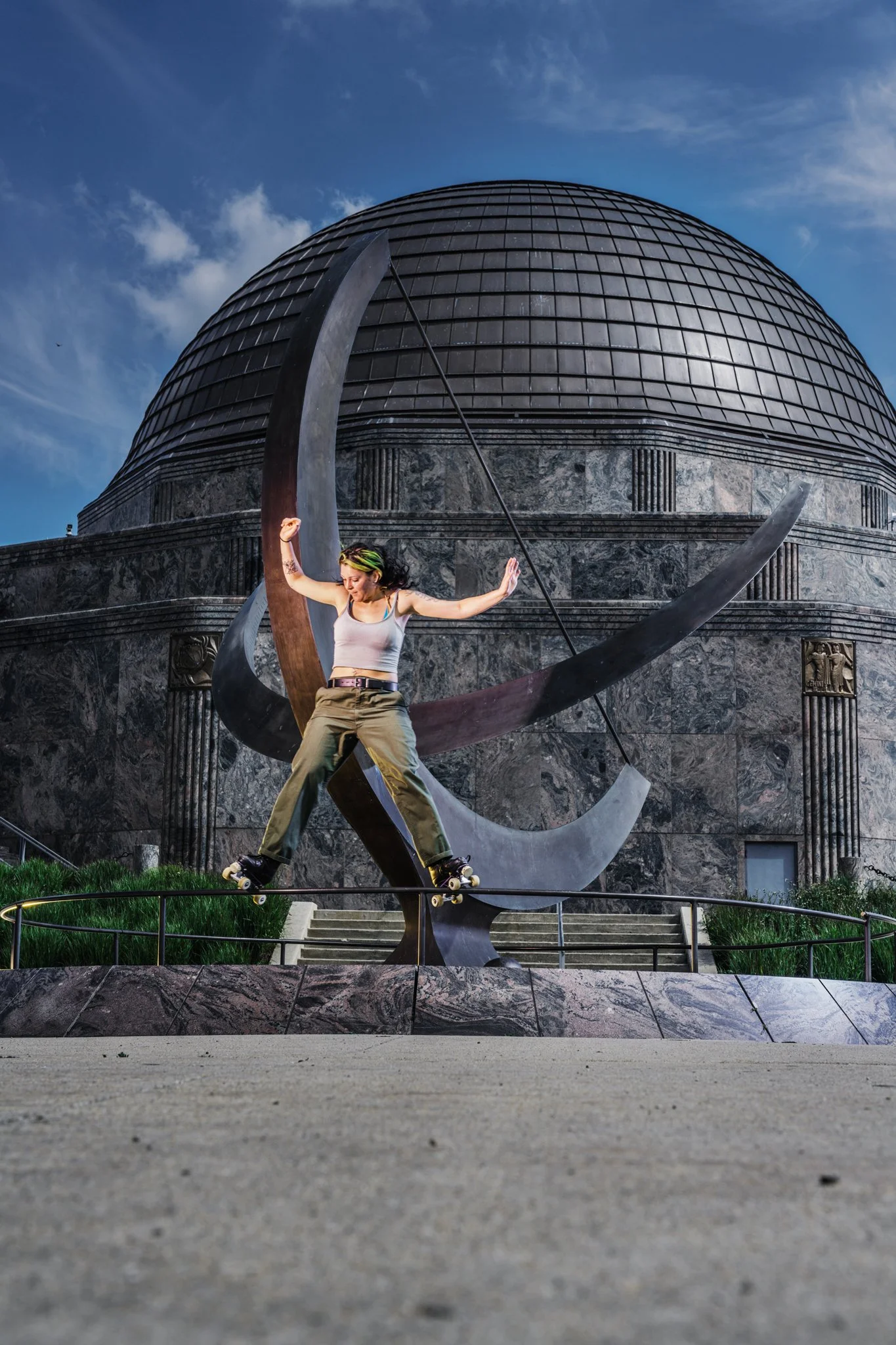
Some photographers focus heavily on architecture and surroundings, others on close-up action. Your work often feels centered on people and culture rather than tricks. How do you see your photography, and what keeps drawing you to document roller skating?
I’m not the strongest skater myself, so focusing on technical tricks for image-making is often better suited to professional skaters who are also photographers. I come from a photojournalism background, and what has never left me is the desire to shine a light on the human experience.
I want to celebrate the people I’m photographing. I want to show the beauty of people first and their joy. To me, roller skating is an act of beauty because it is innocent, fun, and deeply poetic. It’s an act of peace and anti-commercialism in a world that is so often defined by the opposite.
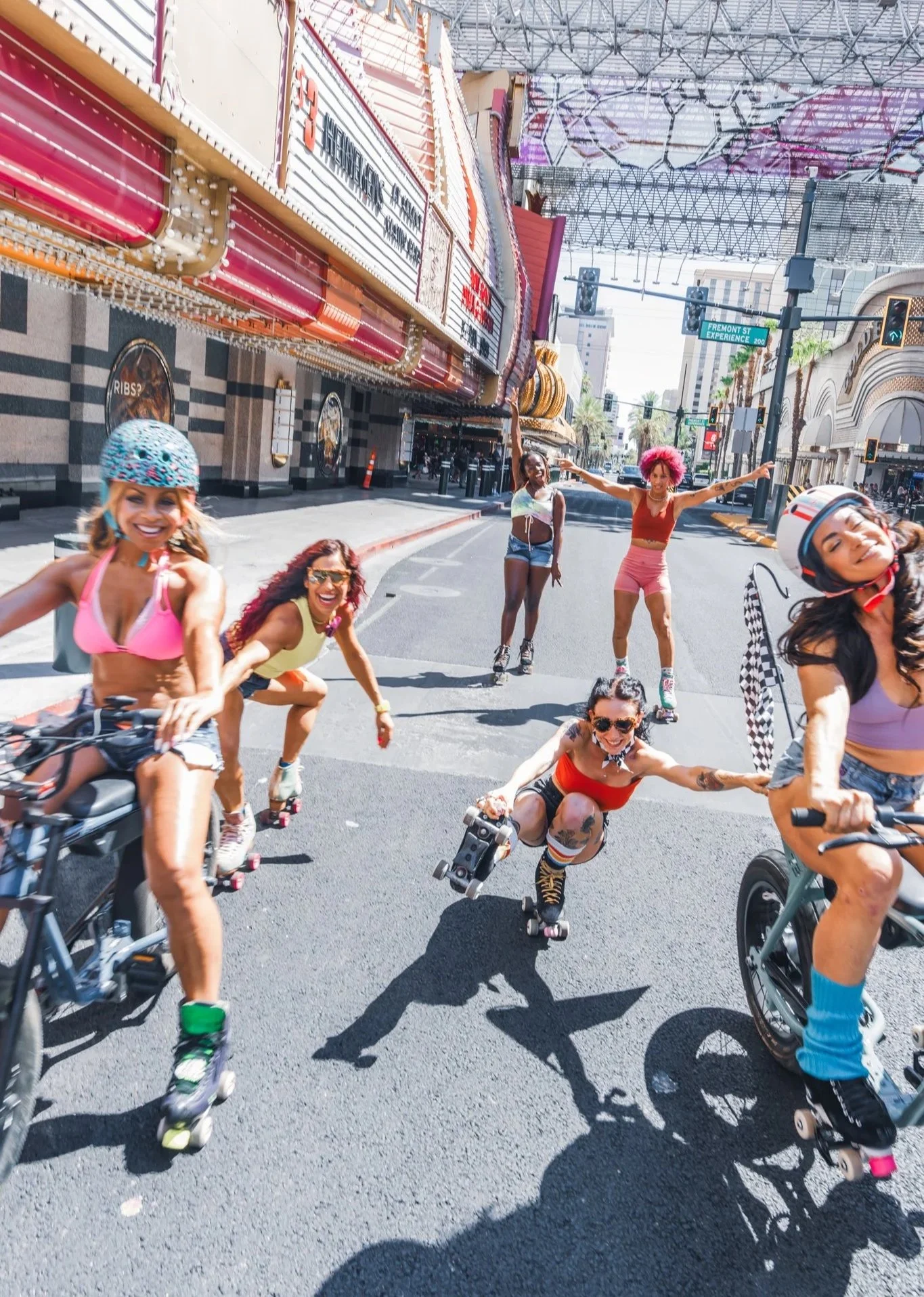
Moxi skate team. Roller Con, Las Vegas 2022.
What is something people often do not realize about photographing skating?
People who aren’t skaters are often perplexed by how much attention I give to it.
Great skaters make extremely dangerous and impressive tricks look effortless, which can make it difficult to convey the truth of the trick in a photograph. Showing the risk, the scale, and the larger context is especially challenging when the audience isn’t made up of skaters.
Skaters are often nervous about running into me, but the best photos almost always happen in the places where collisions are most likely. I usually have to reassure everyone that I’m okay with getting knocked over or having my camera take a hit if it means getting a strong image and, most importantly, if the skaters themselves aren’t hurt.
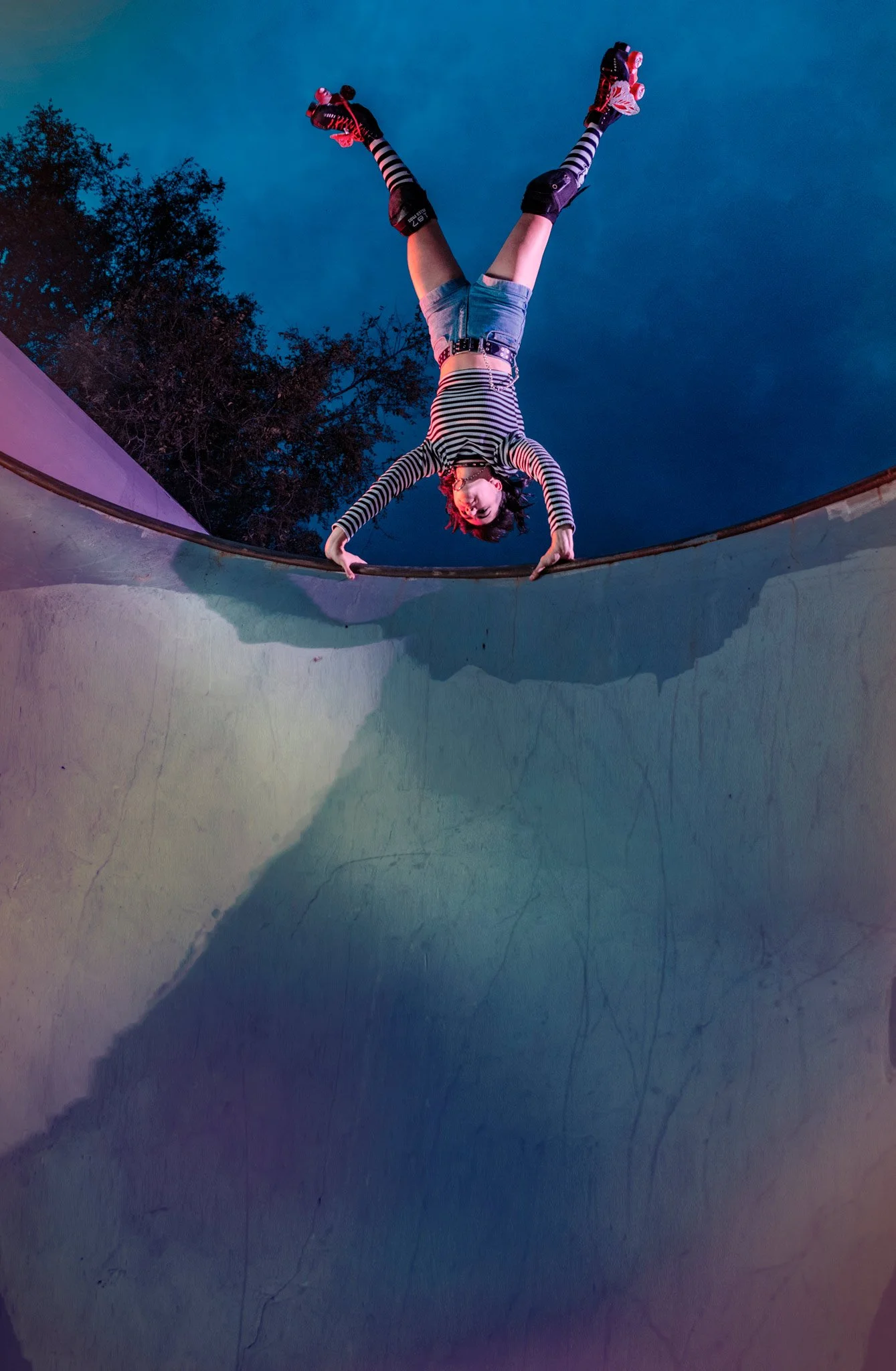
Tatiana Reina. Portland, 2020.
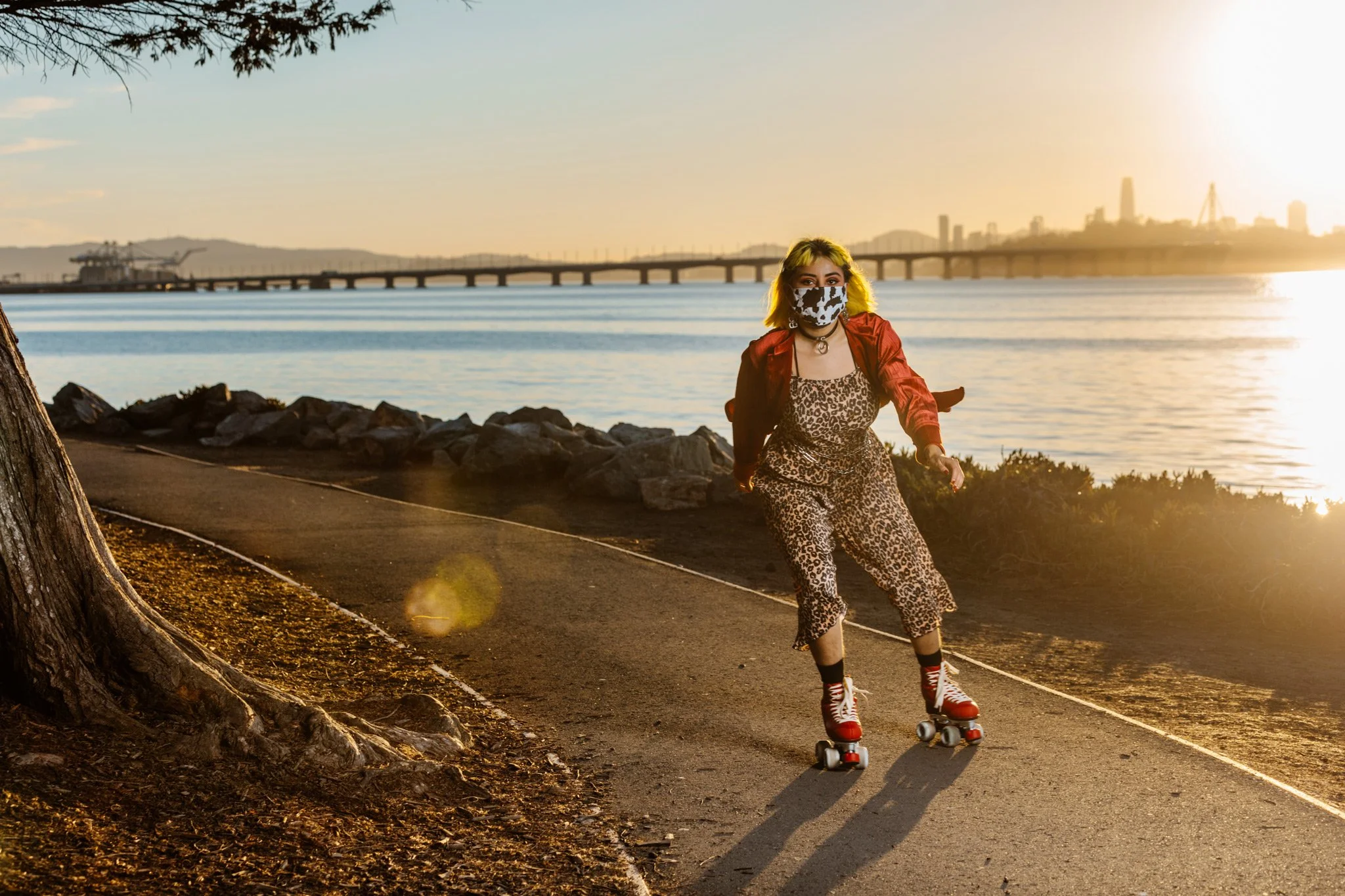
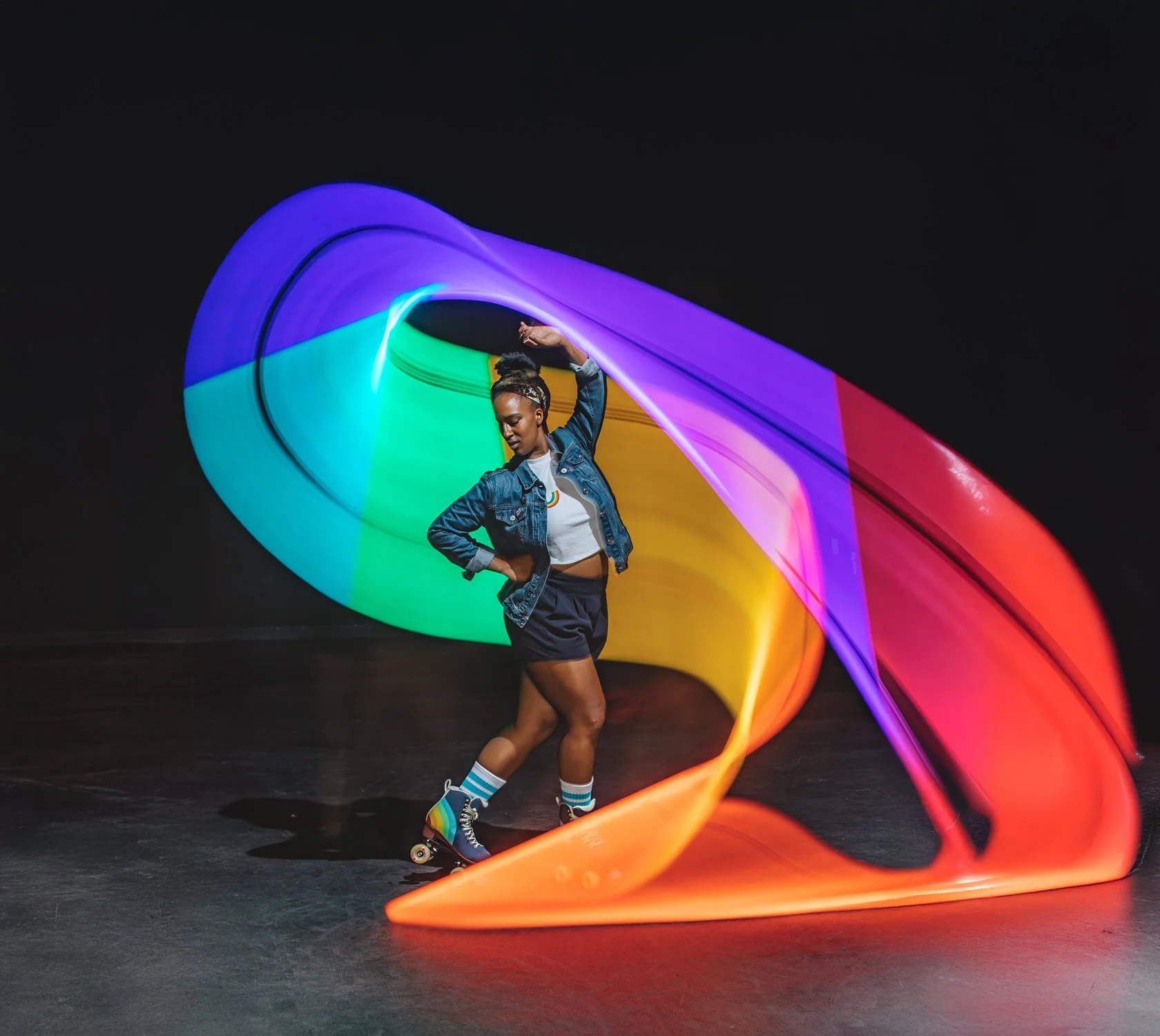
I still remember you walking around Blading Cup with a flash attached to a pole. Your use of lighting really sets your work apart, sometimes reshaping an entire scene. How important is lighting in your process, and how did you develop that approach?
I enjoy lighting because, as you said, it reshapes an entire scene. When I was starting out in photography, I shot a lot of live music performances. Over time, I grew frustrated because I felt like I wasn’t adding much. Anyone else with a camera could have made essentially the same photograph of a guitarist on stage or a singer screaming into a microphone.
Getting into lighting became a way to leave my mark on what I was seeing and to heighten what I cared about showing.
Lighting keeps me engaged as a photographer. I’m always experimenting with new approaches and looking for ways to do something a little different whenever I can.
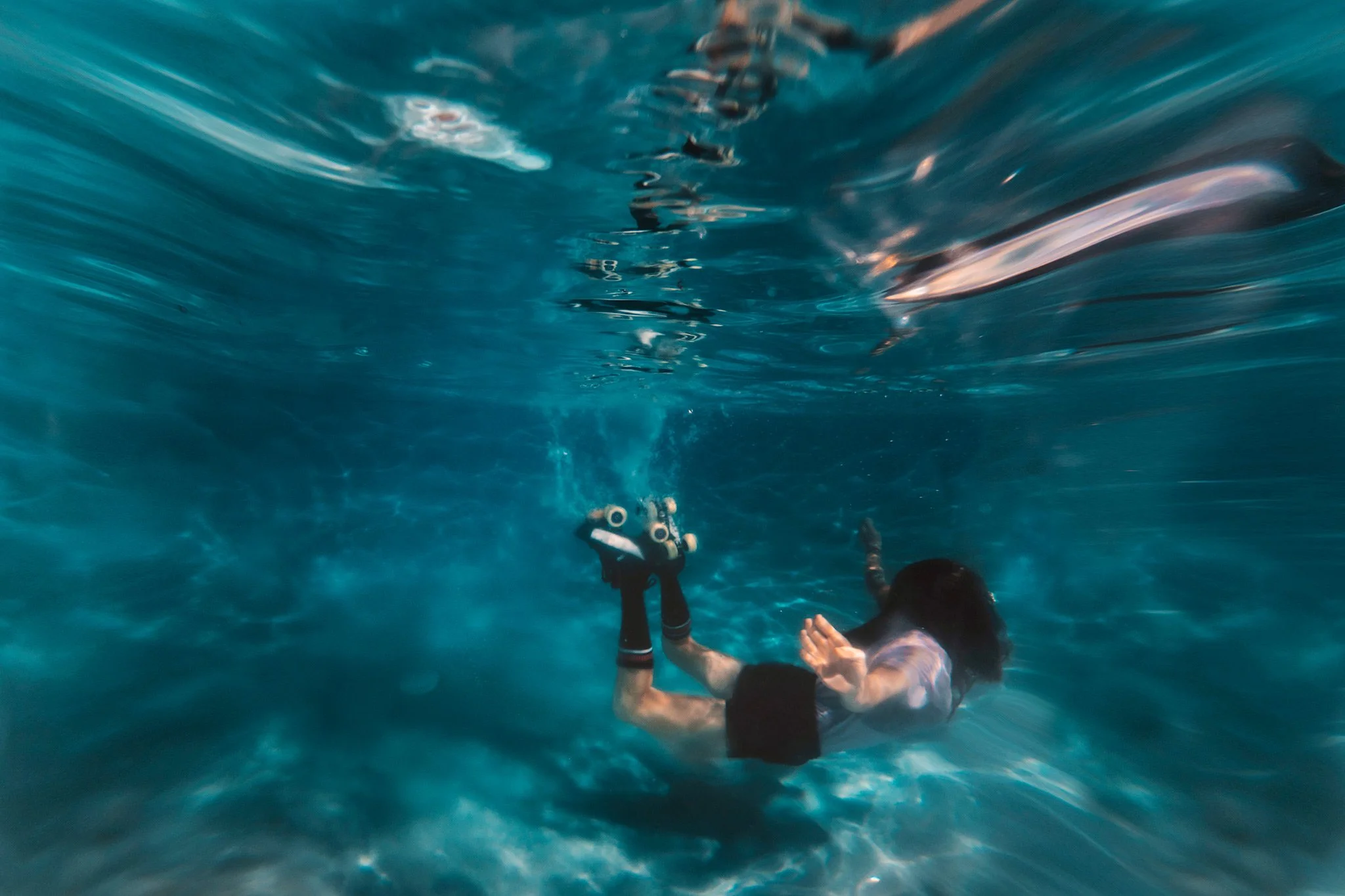
You have worked with many skate brands and projects over the years, covering derby, park skating, and dance. Can you tell us a bit about your journey within the skating industry?
The skate industry often feels like a contradiction to the very act of skating. Many skaters return to skating, or discover it for the first time, as young adults as a way to reclaim a sense of play and escape the weight of the adult world.
For many adults, skating is a journey of self-discovery. It’s about redefining identity, challenging assumptions about what aging bodies are capable of, and pursuing individualism, even when that journey is connected to a team or community. Skating is inherently countercultural, and because of that, it has never fully lent itself to mass consumerism in the way other sports have.
Because of this, even the biggest skate companies in the world feel small to me. While they want to sell loads of skates and accessories, many skaters are searching for what makes them unique, and that’s not an easy thing to package or sell.
My experience with the skate industry has been largely rooted in gratitude. I live a modest life, and the support and opportunities I’ve received over the past eight years have made it possible for me to meet, document, and celebrate the skate community.
Your portfolio spans photojournalism, artist portraits, skating, products, events, and personal projects. Do you feel your career is moving toward a specific direction, or do you enjoy working across different fields without limits?
The most common question I get after people find out I’m a photographer is, “What do you take pictures of?” I usually have to answer, “Everything,” which is an awkward and unsatisfying response for most people.
I hope my career continues in a direction of endless discovery and deeper appreciation for the world around me. I want to keep refining my craft and working with communities that actively push back against ignorance and hate, and instead center radical inclusiveness, mutual aid, and collective well-being. Id at least like to keep making a living whiling making something i find beautiful every once in a while.
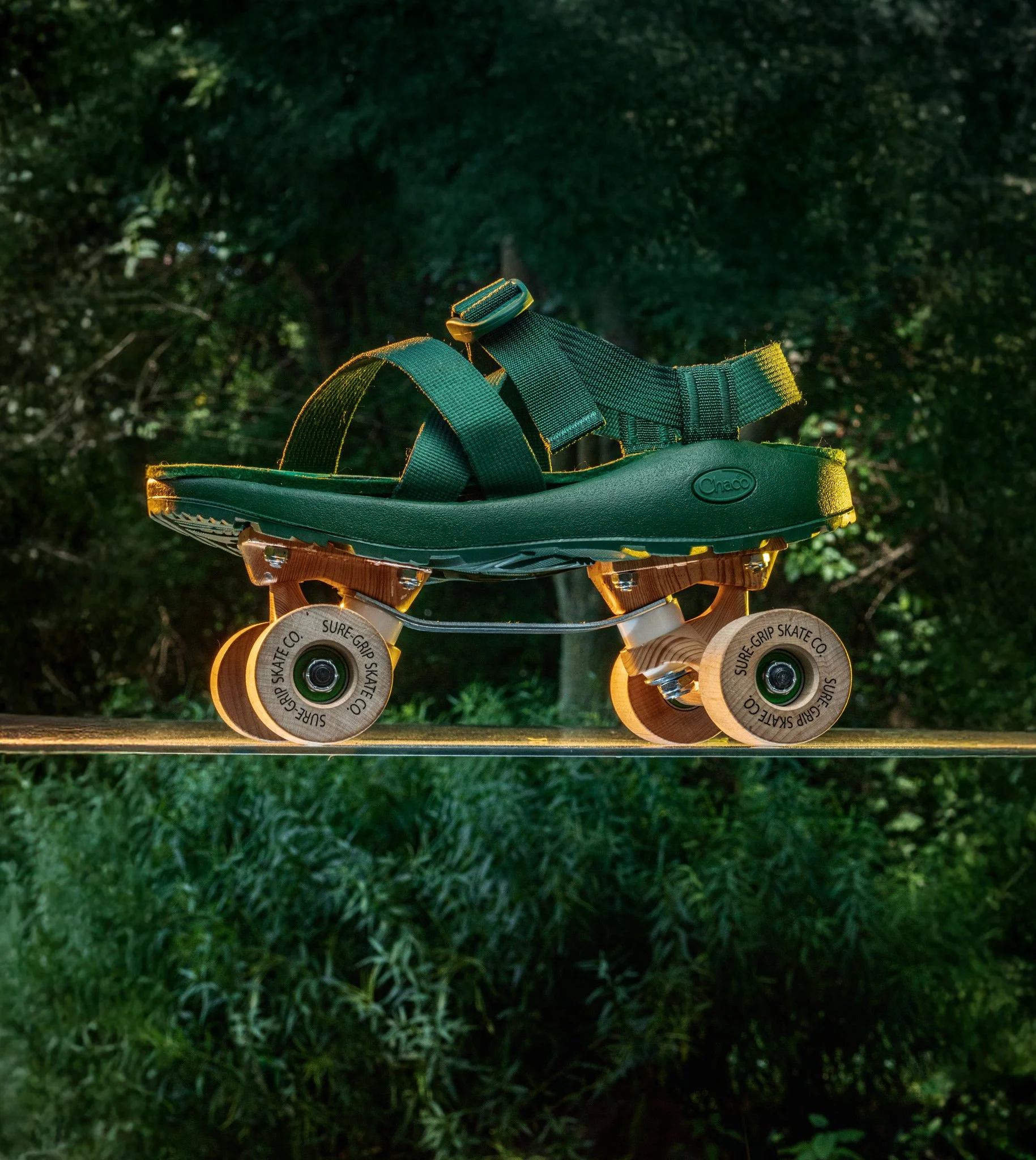
I loved your series of custom skate builds. Did you actually skate any of them, or were they more conceptual objects for you?
Thank you. Every skate I’ve made is something I’ve actually skated in. It was important to me that each one functioned properly while also existing as a conceptual object. I would love to make more of them in the future.
Making strange, custom skates felt like a way to remind people that skating isn’t meant to be serious. At its core, it’s always supposed to be fun.
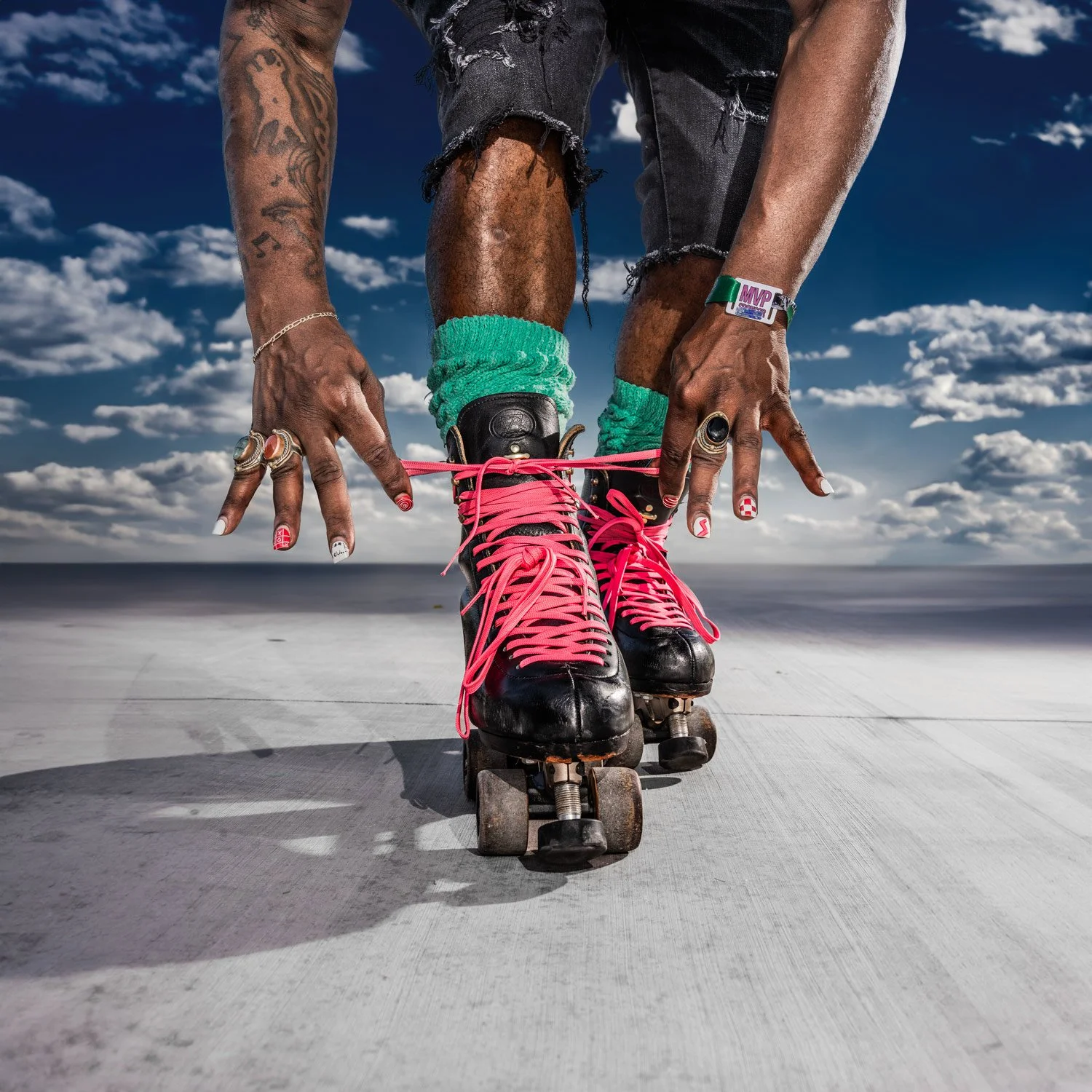
One of your projects that really stood out was the macro photo series for DogDays Magazine Yearbook 06. Can you tell us more about that project and how you managed to bring it to life?
I made that during the isolation of the pandemic. I wanted a way to bring the community together and really show that were all an equal and small part of a beautiful thing.
I brought it together by working with DogDays to spread the word. I then built a website where skaters were able to upload a photo of themselves. I received hundreds of submissions. I cut out each skater from their photograph and placed it in a scene i illustrated at an isometric angle. The isometric angle allowed each disparate skater to coexist despite their varied perspectives.
You released your own photo book Thrown bodies. How did that project come together?
I was asked to photograph a few skaters in Chicago for a magazine called Chicago Magazine. I completed the assignment but the assigning editor retired the same week i turned it in so it never made it into the magazine. I felt disappointed and very guilty that I had asked all these skaters to work with me for naught so I decided to publish the images myself along with other images from the past few years.
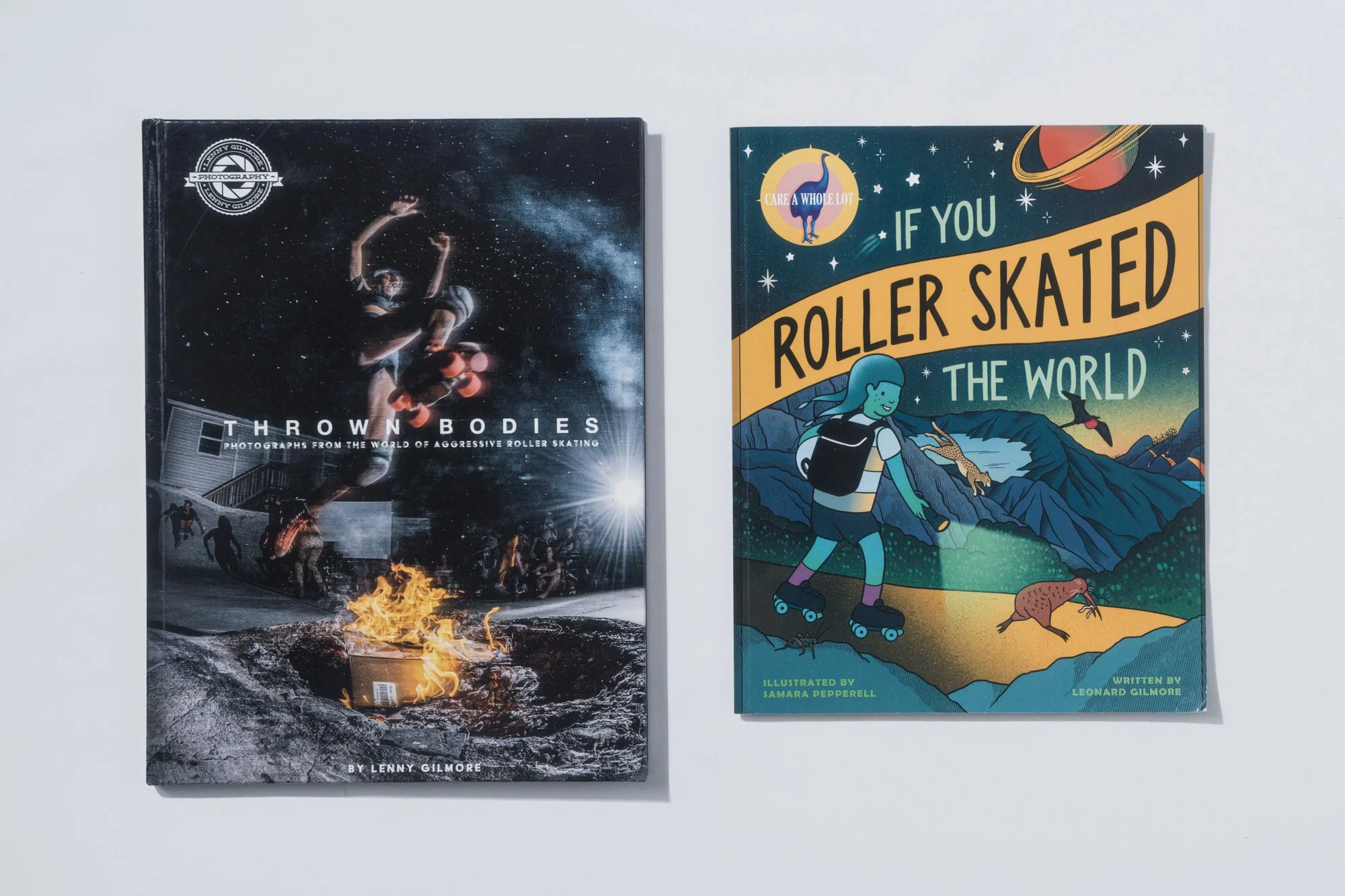
“Thrown Bodies” photo book and “If You Roller Skated the World” children book.
Beyond photography, you also co-wrote a book with Samara aka Lady Trample. What did that project mean to you?
Working with Samara was a dream come true. I put together the project specifically in the hope of collaborating with her and am still amazed and grateful she did.
The book is called “If You Roller Skated the World” and is part of a small imprint a childhood friend and I put together called “Care A whole Lot”.
‘Care a whole Lot’s mission is to encourage artists to make environmentally themed artwork and to make engaging, educational, and fun projects ourselves. So IYRTW was a way to bring together the message of conservation with the love of roller skater (and worldliness that sometimes comes with it). You can roller skate anywhere if you really want to and there are beautiful, fascinating creatures of the earth wherever you roll.
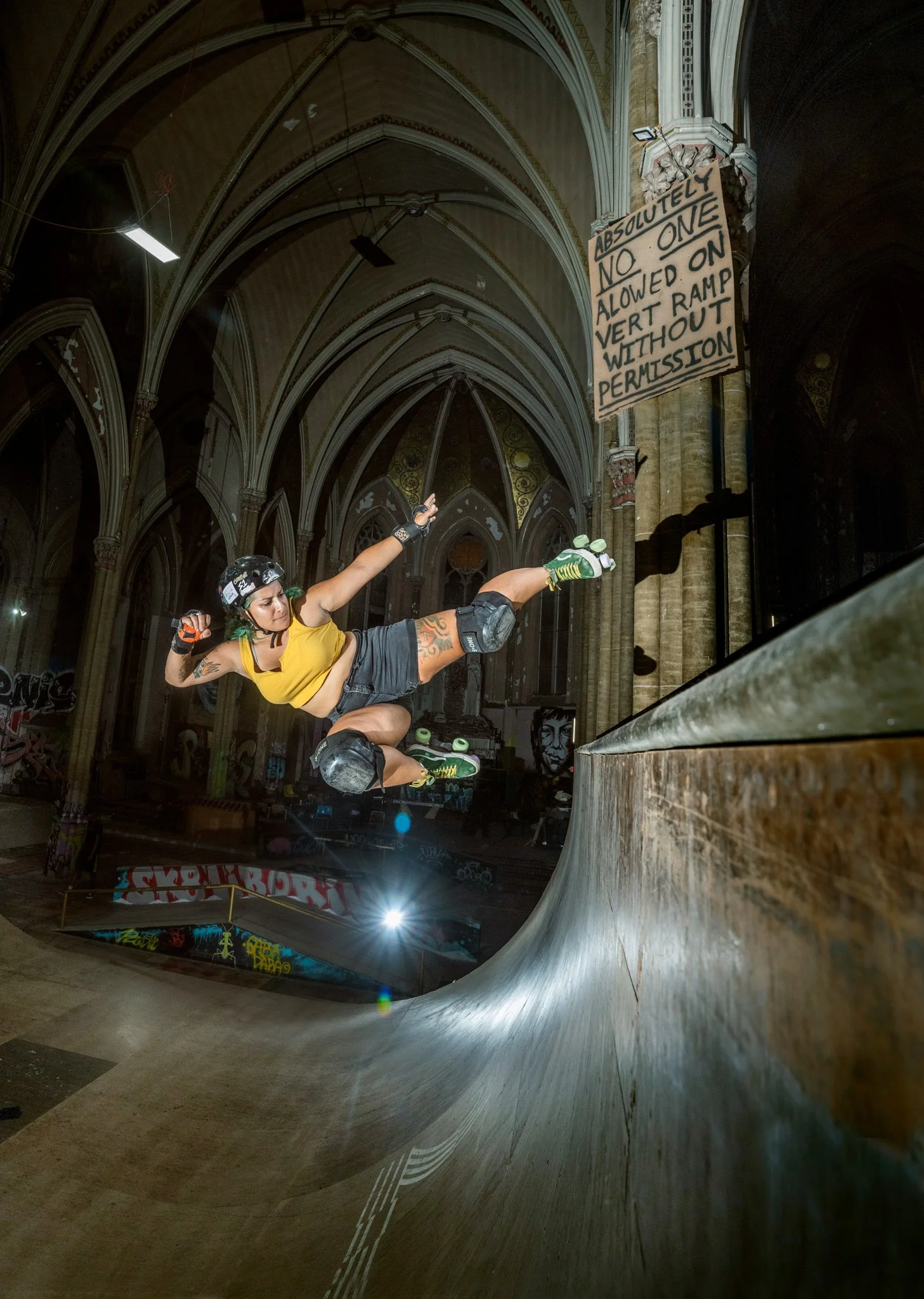
Kathleen Macias “SkateWytch” Judo air.
You have been documenting skating for years. What has changed the most in skating culture since you started, and are there parts of skating culture you feel are still under-documented?
The skating world is always in flux, but sort of never changing. Every few years something comes along that leads to a resurgence in interest in skating wether its the film Whip It! Or something awful like the Covid pandemic. One of the biggest changes I’ve noticed is the diminishment of the aggressive roller skating community. Organizations like CIB helped bring that world together, and without them it has become much harder to tap into from my perspective.
I think the skate scene as a whole is still under-documented. I would love to see more work focused on skaters outside of Europe and the United States, as well as more visibility for skaters over 40 and how they continue to skate while navigating the challenges of aging.
Is there a particular session or image from these years that stands out as especially meaningful to you?
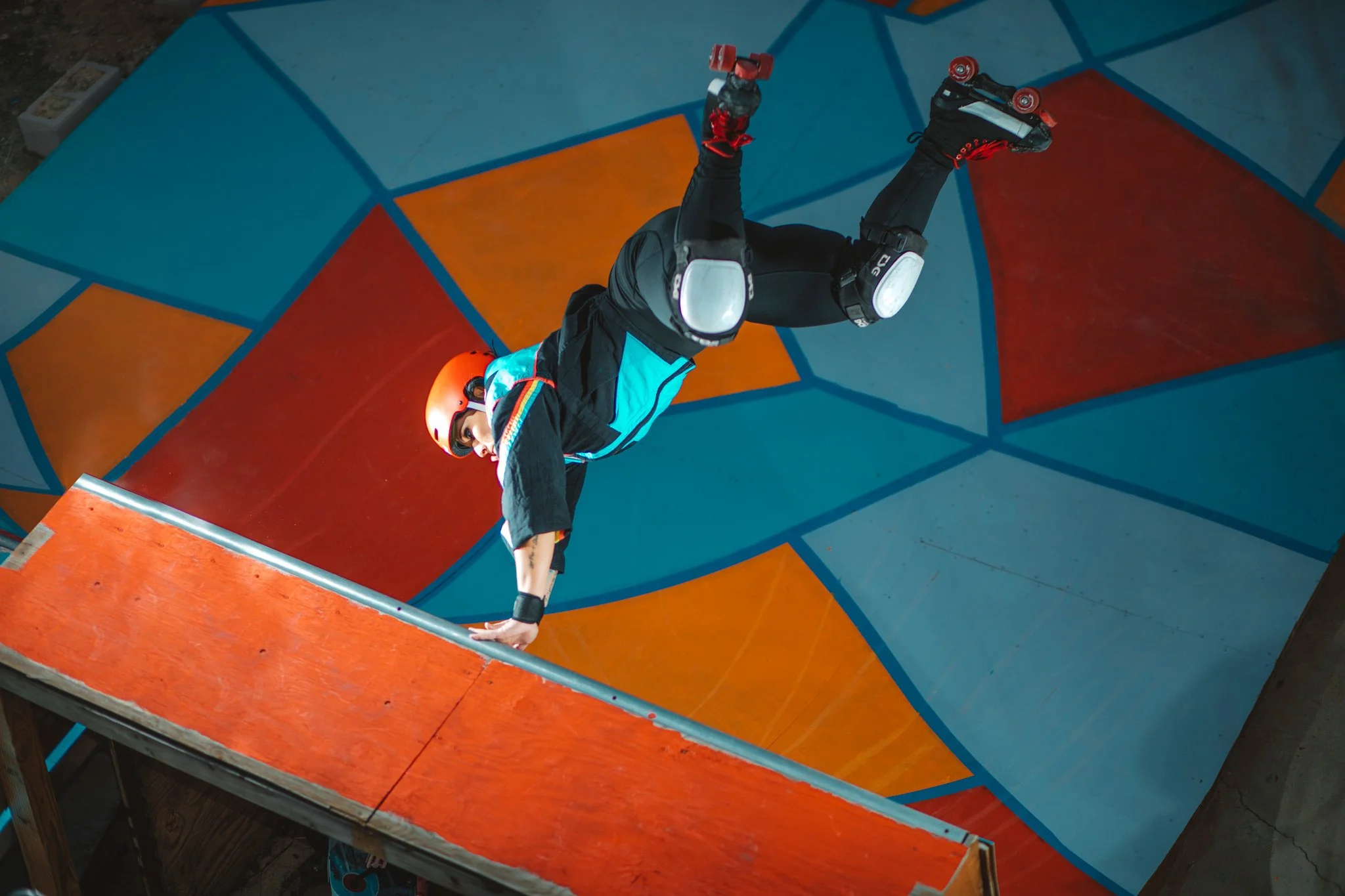
The skater Drama Mama i got to visit for a few days when I was living in my van. We helped paint her half pipe and skated all around New Mexico with her. I got to hear her story and see how weightless on skates she could be in spite of the challenges she has overcome. I think about her story often and its helped me navigate and overcome my own challenges. All the love to her and her family.
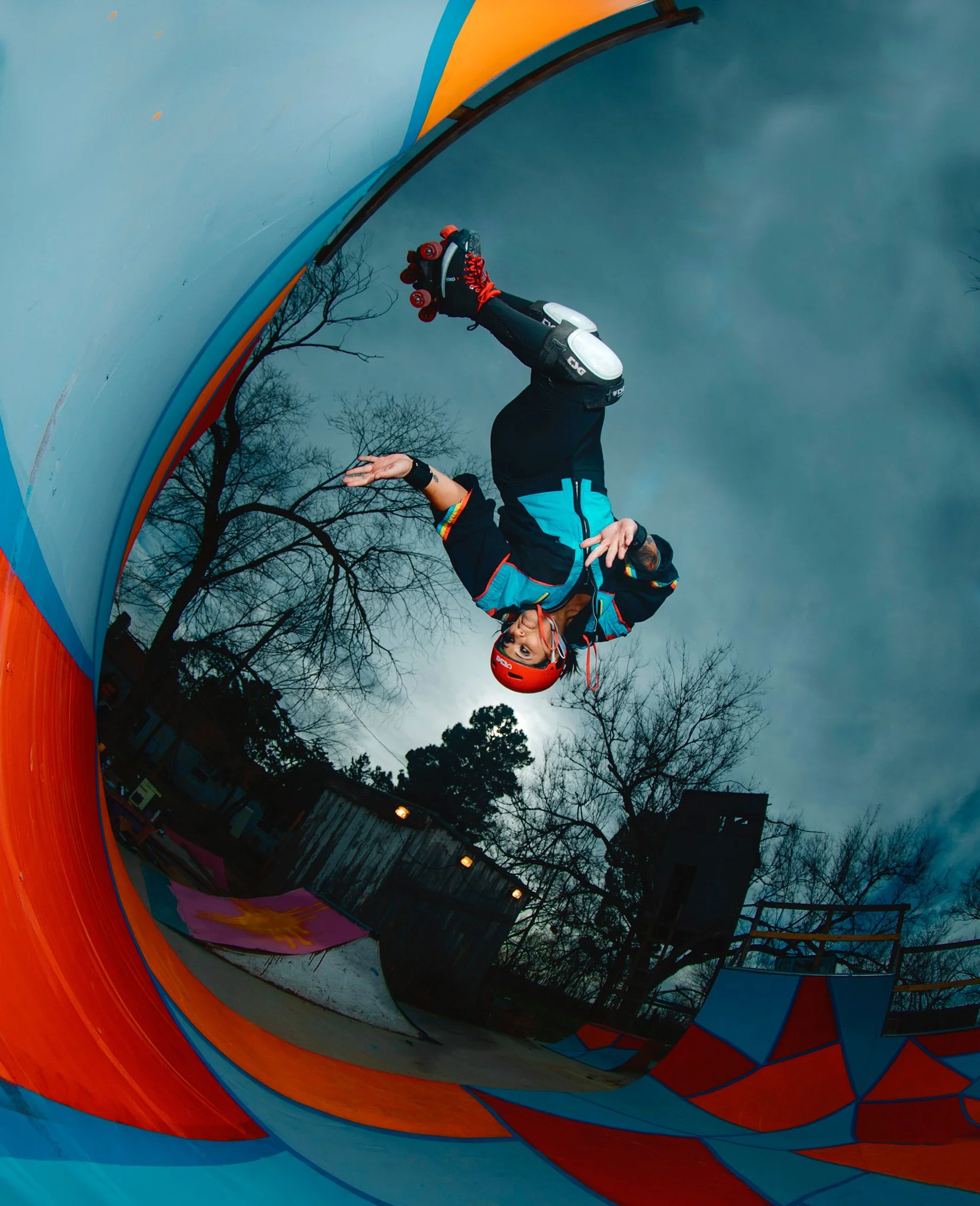
Jeneva Jewel. New Mexico, 2019.
Are there any new projects you are currently working on, or ideas you are excited to explore next?
Im working on a photo book of my roller derby photography that should be out in a few months. My book of Aggressive roller skating photos is out now but I haven’t shared or promoted it yet so I’m excited to talk about it over the next year. Looking back over those photos has given me a chance to reflect on what sorts of photos Id like to take in the future, so well see what I can come up with. Open to new opportunities if anyone reading this wants to collaborate.
Ive also just got done shooting some new skates with Riedell so I’m exited to see those out in the world.
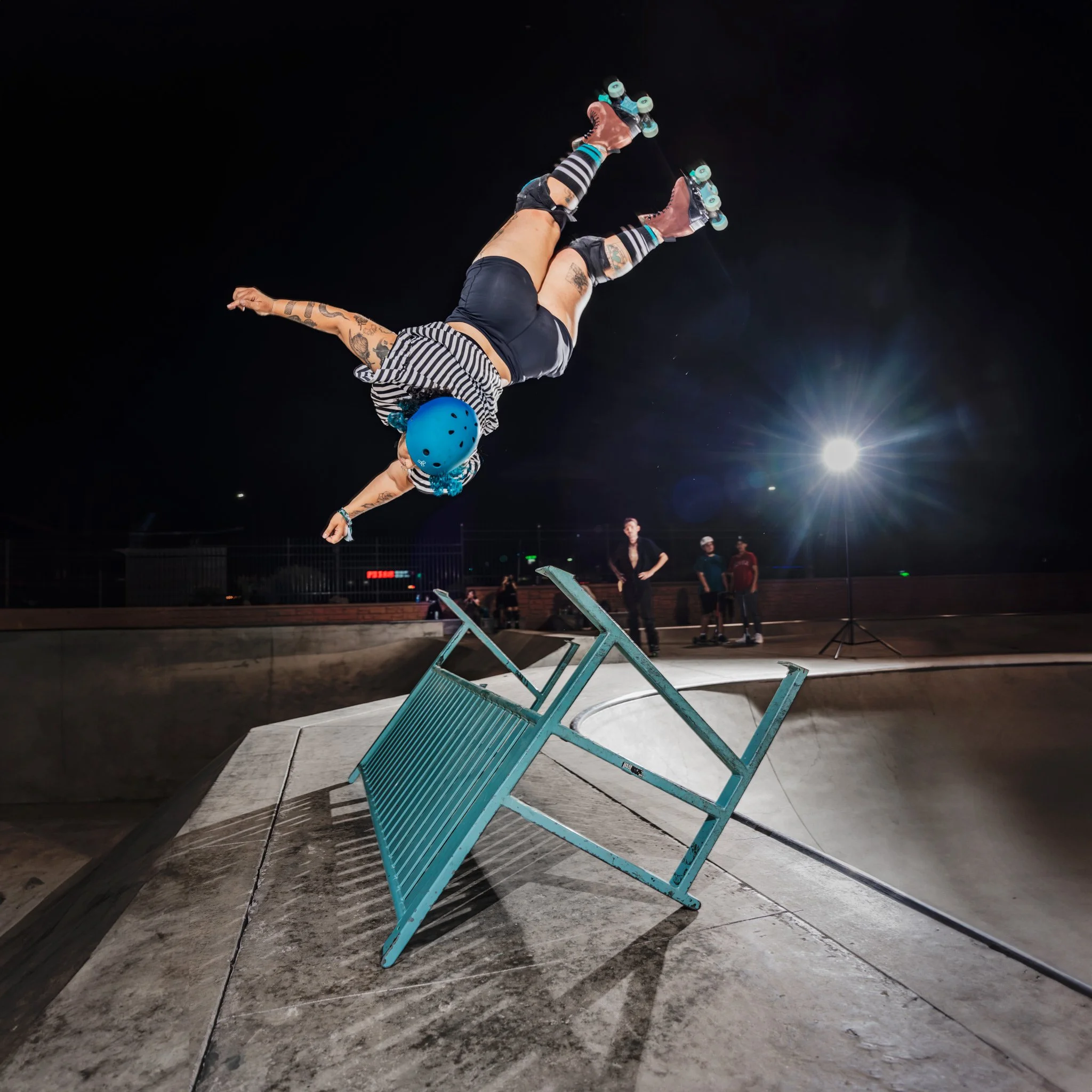
Kiana Barani flip transfer over the bench.
What advice would you give to photographers who want to enter the skating world?
Love skating & be kind.
Thank you for your time, Lenny. Is there anything else you would like to share with the skating community?
I’m always looking to photograph skaters and tell their stories so if you’d like to come together, reach out. Id love to hear from you and hopefully skate together someday soon.
Instagram: Lenny Gilmore
Portfolio and book purchase: lennygilmore.com